 Brandshoes.eu
 Polski
 English
 English (Canada)
 English (Australia)
 Български
 Română
 Magyar
 Čeština
 Slovenčina
 Nederlands
 Nederlands (België)
 Français
 Українська
 Ελληνικά
 Lietuvių kalba
 Italiano
 Español
 Português
 Latviešu valoda
 Eesti
Eesti
 Türkçe
 العربية
 简体中文
简体中文
 Русский
 Slovenščina
Men’s Fall Shoes: Lace-Up, Chelsea, or Work Boots?


Choosing men’s fall shoes comes down to two things: the weather you’ll be walking in and the pants you’ll wear them with. We compare Chelsea boots, lace-up boots, and work boots, show you 13 pairs we have in stock, and tell you which material and which sole will survive the November rain.
Which men’s shoes are best for fall? For the city, the office, and jeans, choose leather Chelsea boots or lace-up boots on a sole with a pronounced tread. If you spend a lot of the fall walking through parks and along unpaved paths, or waiting in the rain at the bus stop, go for work boots or hiking shoes with a waterproof membrane, because without one even leather treated with waterproofing spray will eventually soak through.
The three names in the title are the three styles we compare in this guide. At the time of writing, our men’s autumn shoes category has 286 products, from leather sneakers to boots with a warm lining. Below you’ll find the differences between the styles in one table, 13 pairs we have in stock, and tips on which material and which sole will survive the October rains.
Lace-Up, Chelsea, and Work Boots in One Table
A Chelsea boot is a short slip-on boot with elastic side panels and no laces. A lace-up boot is a boot with a shaft that laces up to the ankle. A work boot, as stores use the term, is a heavier lace-up boot that rises above the ankle and sits on a thick sole with a deep tread, modeled on the boots made for job sites and hiking trails.
| Style | How they go on | Sole | What weather they’re for | What they go with |
|---|---|---|---|---|
| Chelsea boots | slip-on, elastic panels on the sides of the shaft | thin or medium, often smooth | dry cold, drizzle on the way to the office | suit, chinos, slim jeans |
| Lace-up boots | laced to the ankle; some models also have a zipper | medium, with a tread | rain, wet leaves, the daily commute | jeans, chinos, corduroys |
| Work boots | laced above the ankle, taller and thicker shaft | thick, with a deep tread | mud, the park, a trip out of town | straight jeans, cargo pants |
| Hiking shoes with a membrane | laced, low-cut or above the ankle | hiking-style, heavily treaded | all-day rain, wet grass, the trail | outdoor pants, jeans |
Men’s Chelsea Boots: Four Pairs, Four Materials
A Chelsea boot has no laces and no zipper, so only the close-fitting shaft and the elastic side panels hold your foot in place. That’s both its strength and its limitation: you can slip it on in a few seconds, but if it’s too loose, your heel will lift with every step. That’s why you should try Chelsea boots on in the socks you’ll be wearing them with in October.
The elastic side panels should hug the ankle, not gape. The pull tab at the back of the shaft makes the boot easier to slip on, and the elastic panels stretch a little over time, so well-fitting Chelsea boots may feel tight for the first few days. If you have a high instep and the boot already pinches as you slip it on, you’ll be better off with a lace-up boot, where you can loosen the laces.
For fall, two things matter: the upper material and the sole. The black GUSTAVO in smooth leather will handle drizzle and goes with a suit. The brown suede LAMBER and the navy velour leather KORNEL look warmer, but they do best on dry days and with waterproofing spray. The ERAZM in black nubuck has a leather sole: elegant, but slippery on wet paving stones.
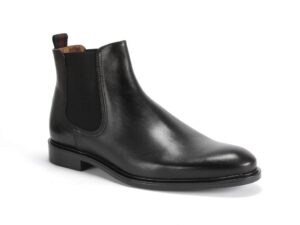 Domeno GUSTAVO
View product
Domeno GUSTAVO
View product
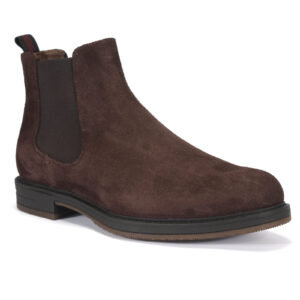 Domeno LAMBER
View product
Domeno LAMBER
View product
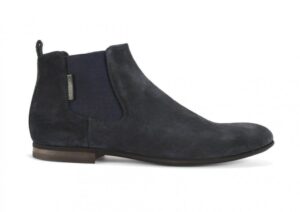 Domeno KORNEL
View product
Domeno KORNEL
View product
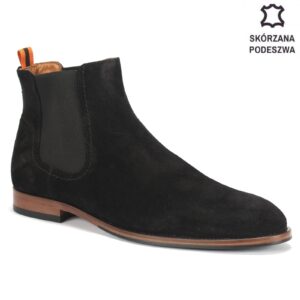 Domeno ERAZM
View product
Domeno ERAZM
View product
Men’s Lace-Up Boots: Lacing, Zippers, and Warm Linings
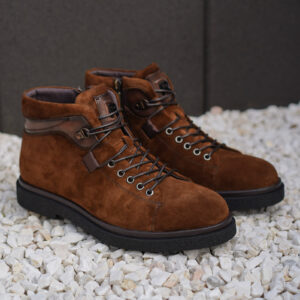
A lace-up boot gives you what a Chelsea boot lacks: the laces pull the shaft snug around the ankle, so the boot holds your foot even when you’re wearing a thicker sock. Many models also have a side zipper, like the brown suede R312B-06_BR from Domeno. You adjust the lacing once, and from then on the boot goes on almost as quickly as a Chelsea boot.
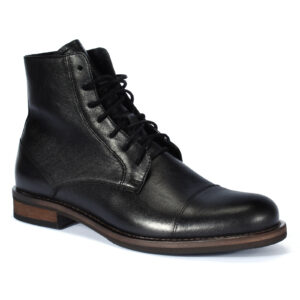
If fall where you live ends with November frosts, choose lace-up boots with a warm lining. The black 3924N504 has a warm felt lining inside, while the brown 6101BR1028_BR has a warm lining and a thick sole with a deep tread. Both pairs are made of genuine leather, so once treated with waterproofing spray they stand up well to rain.
Pay attention to the lacing style as well. On lace-up boots with open lacing, the side sections of the upper are stitched on top of the front of the boot, so the boots are easier to adjust to a high instep. Closed lacing looks sleeker and dressier, but it leaves less room for adjustment.

Work Boots and Membrane-Lined Shoes for Rain and Mud
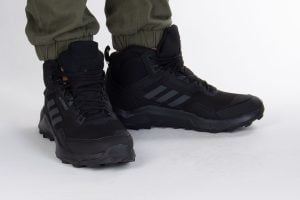
When fall means mud, wet grass, and rain all day long, you need a sole with a deep tread and an upper that keeps water out. Work boots give you the first, but it takes a membrane to make a shoe waterproof. In model names, you can recognize it by the abbreviations: GTX stands for GORE-TEX (Adidas TERREX AX4 MID GTX), and WP is short for waterproof, marking the waterproof version (the CMP Rigel Low WP has a CLIMAPROTECT membrane).
Don’t confuse a waterproof shoe with a spray-treated one. Waterproofing spray makes water run off the upper, but in prolonged rain the water will eventually soak in anyway, especially through the seams. A membrane is a separate layer under the upper that keeps outside water out while letting water vapor from your foot escape. If the product page doesn’t include the word “membrane” or the abbreviations GTX or WP, treat the shoe as one that can handle drizzle, not a downpour.
The low-cut Rigel Low WP is a good match for city paths and a fall walk in the woods. A model that rises above the ankle, such as the AX4 MID GTX, protects better against puddle water and holds your foot more securely on uneven ground. Just remember that a shoe with a membrane and a warm lining quickly gets too warm in a heated office.
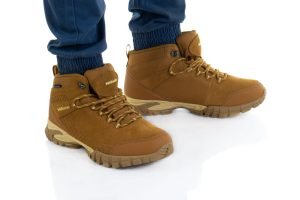
The brown Lee Cooper LCJ-23-31-3067M and the honey-coloured Hi Mountain CSM-01 are work boots with a warm lining for cold mornings. Their descriptions don’t mention a membrane, and the CSM-01 has a suede upper, so they need waterproofing spray before the season starts. You’ll find more pairs like these in the men’s hiking shoes and work boots category.
 Lee Cooper LCJ-23-31-3067M
View product
Lee Cooper LCJ-23-31-3067M
View product
 Hi Mountain CSM-01
View product
Hi Mountain CSM-01
View product
 Adidas TERREX AX4 MID GTX
View product
Adidas TERREX AX4 MID GTX
View product
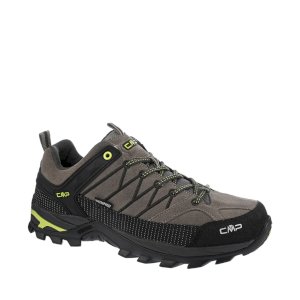 CMP Rigel Low WP
View product
CMP Rigel Low WP
View product
Full-Grain Leather, Suede, Nubuck, or Velour Leather: What Stands Up to Rain
Men’s leather shoes for fall differ mainly in the finish of the upper. In most pairs in the men’s leather shoes category, the upper is made of one of four materials, and each of them reacts differently to water and salt. On the product page, you’ll find the material of the upper under the “Upper material” attribute.
- Full-grain leather
- Smooth leather with its top layer, the grain, left intact. With waterproofing spray, it stands up to rain best of the four, and you can wipe off mud and salt with a damp cloth. The GUSTAVO and the 3924N504 are finished this way.
- Nubuck
- Full-grain leather sanded on the outer surface, with a short, velvety nap. It’s tougher than suede but absorbs water in much the same way, so without waterproofing spray it darkens in the rain. Example: ERAZM.
- Suede
- Soft leather with a fine nap. It looks best in browns and beiges, but it’s the quickest to pick up water and salt stains. Examples: LAMBER, R312B-06_BR, Hi Mountain CSM-01.
- Velour leather
- Leather with a velvety surface that feels similar to suede. You care for it the same way: with a suede brush and waterproofing spray. Example: KORNEL.
Colour matters, too. Rain and salt stains show less on dark suede and velour leather than on beige or light brown.
If you want one pair for the whole fall without daily upkeep, choose full-grain leather. Wear suede, nubuck, and velour leather on dry days, or treat them with waterproofing spray before the first rain. Reapply the spray every few weeks and after every cleaning.
The Sole: Rubber, Synthetic, EVA, or Leather
On wet leaves and sidewalks, it’s the sole that decides whether you walk confidently or cautiously. Look at the underside of the shoe in the photos on the product page and check the “Sole” attribute.
- Rubber: flexible, doesn’t let water through, and usually has the deepest tread. It’s the sole of work boots and hiking shoes, such as the Lee Cooper LCJ-23-31-3067M.
- Synthetic (plastic): the most common sole on city shoes. It’s light and doesn’t absorb water, and its grip depends on the tread pattern, so look for distinct cuts in the tread rather than a smooth surface.
- EVA: a lightweight foam that feels soft underfoot, as on the KORNEL Chelsea boots. On wet sidewalks and ice, it grips worse than rubber, which makes it a sole for fall rather than winter.
- Leather: elegant and breathable, but it slips more than rubber on wet cobblestones and soaks up water in a puddle. Wear leather-soled shoes like the ERAZM on dry days, or take them to a cobbler to have a thin rubber layer glued on.
You can judge the tread from a photo of the sole or of the shoe from the side: the more pronounced the lugs and grooves, the better the sole channels water and mud away instead of sliding over them.
What to Wear Them With: Jeans, Chinos, a Suit
Jeans. Chelsea boots and lace-up boots look best with a slim or straight leg that ends just above the top of the boot or breaks slightly over it. A very wide leg will cover the whole boot, and one that’s too long will bunch up like an accordion on the shaft. We go into leg cuts in more detail in our guide to men’s jeans fits from Mustang. Work boots, as the chunkiest style, look best with straight jeans or cargo pants.
Chinos. Brown suede or navy velour leather with beige or olive chinos is the simplest fall outfit for a workplace without a dress code. Wear your chinos ankle-length or slightly cuffed so they don’t bunch up on the shaft.
Suit. Only plain black or dark brown Chelsea boots in full-grain leather on a thin sole, like the GUSTAVO. The suit pants should cover the shaft when you’re standing, and your socks should match your pants so that no contrasting gap shows when you sit down. Save thick-soled lace-up boots and work boots for jeans.
Colour. Black Chelsea boots and lace-up boots go with black, grey, and navy pants; brown ones go with denim, beige, olive, and navy. With black pants, black shoes are the safest choice.
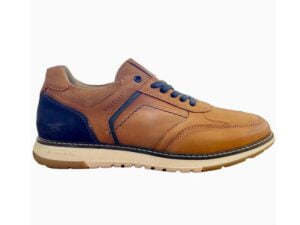
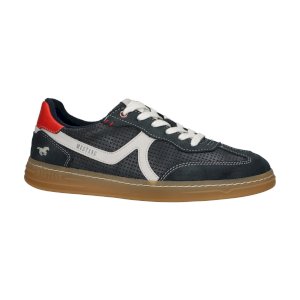
On dry, cool days, you don’t need a shaft that rises above the ankle. With jeans, low-cut leather shoes or sneakers will do, for example from the Mustang men’s shoes category: the cognac 4946-301-307 in genuine leather or the navy 4204-302-820 in perforated synthetic leather.
Before the First Rain: A Checklist
- Style: Chelsea boots for the office and the city, lace-up boots for everyday wear, work boots and a membrane for mud and prolonged rain.
- Material: full-grain leather if you don’t want to think about upkeep; suede, nubuck, and velour leather only once they’ve been treated with waterproofing spray.
- Sole: rubber or synthetic with a pronounced tread; save leather for dry days.
- Size: try shoes on in fall socks, and with Chelsea boots check that your heel doesn’t lift.
- Waterproofing spray: spray new shoes before you wear them outside for the first time, and repeat every few weeks.
- Drying: stuff wet shoes with paper and dry them away from the radiator, because hot air dries out the leather, which then hardens and cracks.
- Salt: once salt appears on the sidewalks, wipe your shoes with a damp cloth as soon as you get home.
Once temperatures drop below freezing for good, switch to men’s winter boots with a warm lining and a rubber sole. Until then, one well-chosen pair from this roundup is all you need.
Frequently asked questions
Related posts

Fall Women’s Shoe Trends 2026 and How to Wear Them
Fall women’s shoe trends 2026 are slim retro sneakers, soft loafers, and ankle boots on a stable block heel, ideally in brown, olive, or burgundy. We show what…
Read more
Men’s Jeans Fits: A Guide to Mustang Cuts
The fit of men’s jeans determines how they sit through the thigh and at the ankle—the W/L size alone won’t take care of that. We compare Mustang cuts from Vegas…
Read more
Shoe Size Chart: EU, UK, US and cm, and Differences Between Brands
A shoe size chart gives centimetres, but not always the same kind: sometimes it is foot length, sometimes the Japanese size from the size label, and at Domeno i…
Read more
Comments (0)
No comments yet. Be the first to comment!